Chemical Peels Treatment in Pune: What They Really Do to Your Skin
If the words “chemical peel” sound intimidating, you are not alone. Many people imagine dramatic peeling, redness or a harsh treatment when they hear the term. In reality, chemical peels are established dermatological procedures that can help improve several common skin concerns when selected appropriately.
A good chemical peel is not necessarily the strongest one. It is the one that is right for your skin, your concern and your treatment goals.
At Eternis Clinic, Erandwane, Pune, the approach to skin rejuvenation begins with understanding your skin and identifying the treatment most suited to your needs. Whether you are concerned about acne, post-acne marks, uneven pigmentation or dull-looking skin, a personalised assessment can help determine whether a chemical peel is an appropriate option.
What Is a Chemical Peel?
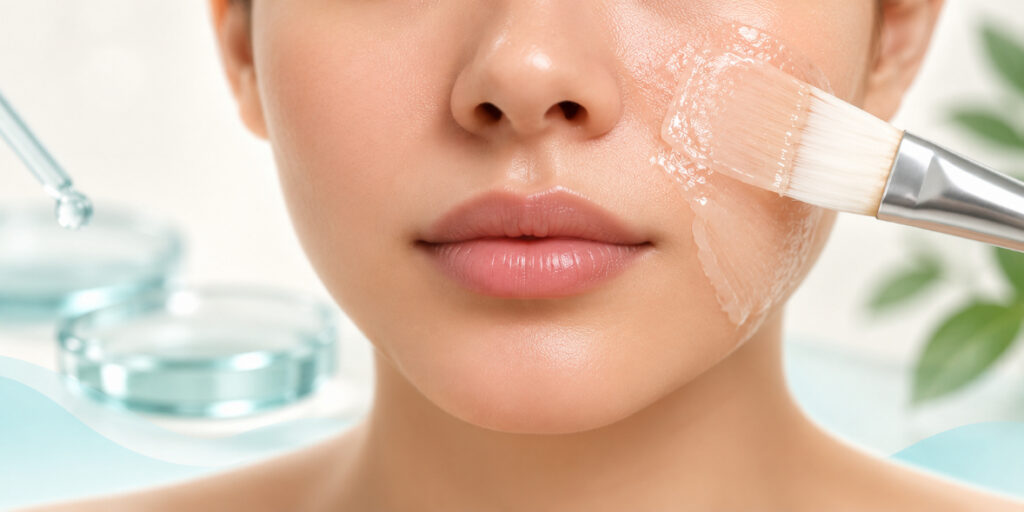
A chemical peel is a dermatological procedure in which a carefully selected solution is applied to the skin to encourage controlled exfoliation and renewal.
Depending on the peeling agent, formulation and treatment depth, it can help loosen the bonds between surface skin cells, improve the appearance of clogged pores and encourage a more even-looking complexion.
Chemical peels may be considered for several concerns, including:
- Active acne and clogged pores
- Dark marks left after acne
- Uneven skin tone and selected pigmentation concerns
- Melasma in appropriately selected patients
- Dull or rough-looking skin
- Mild sun-related skin changes
- Fine superficial lines
- Certain superficial textural irregularities
A dermatologist evaluates these concerns before recommending a peel, helping ensure that the treatment is selected for your skin rather than simply because it is popular.
Why Is It Called a Chemical Peel?
The word “chemical” can sound intimidating, but it simply refers to the substances used in the treatment. The term does not automatically mean that a procedure is harsh or unsuitable for everyday skin concerns.
Different peeling agents have different properties. Their effects depend on factors such as concentration, formulation, pH, application technique and the depth of treatment.
Chemical peels range from gentle superficial treatments to procedures that act more deeply within the skin. They are not interchangeable, and a stronger peel is not necessarily a better choice.
The objective is to select a treatment that addresses the concern while respecting the skin’s natural barrier and recovery process.
What Are the Different Types of Chemical Peels?
Chemical peels are broadly classified according to how deeply they act within the skin.
1. Superficial Peels
Superficial peels primarily target the outermost layers of the skin. They may be useful for acne, clogged pores, dullness, uneven tone and selected superficial pigmentation concerns.
They generally involve less recovery time than deeper peels. Some people experience mild dryness, temporary redness or fine flaking, while others notice very little visible peeling.
Superficial peels are often considered when the aim is gradual improvement with minimal disruption to everyday activities.
2. Medium-Depth Peels
Medium-depth peels act further into the skin and may be considered for selected pigmentation concerns, sun-related skin changes and certain textural irregularities.
They require more careful planning and usually involve a longer recovery period than superficial peels. The choice depends on the condition being treated, the patient’s skin characteristics and the expected balance between benefits and recovery.
The appropriate depth is determined during a dermatological consultation rather than chosen simply according to how much peeling someone hopes to see.
Which Acids Are Used in Chemical Peels?
Different peeling agents have different properties. The choice depends on the skin concern, sensitivity, pigmentation history and the treatment response expected.
Glycolic Acid
Glycolic acid is an alpha-hydroxy acid (AHA) commonly used in superficial peels. It may help improve dullness, uneven skin tone, mild textural irregularities and selected pigmentation concerns.
Its effect depends on the concentration, formulation, pH and treatment protocol.
Lactic Acid
Lactic acid is another AHA used for superficial exfoliation. It may be considered for people looking to improve dullness and the appearance of mature or dehydrated-looking skin.
The suitability of a lactic acid peel depends on the formulation and the individual’s skin condition.
Mandelic Acid
Mandelic acid is an AHA with a larger molecular size than glycolic acid. It may be selected when a more gradual superficial exfoliating approach is desired, including for certain acne-prone or pigmentation-prone patients.
However, no acid is automatically suitable for everyone with a particular skin type. Individual assessment remains important.
Salicylic Acid
Salicylic acid is a beta-hydroxy acid (BHA). Because it is oil-soluble, it can work within oil-rich pores and is commonly used for oily, congested and acne-prone skin.
It may help with clogged pores and selected forms of acne, often alongside an appropriate skincare routine and other acne treatments when needed.
Trichloroacetic Acid (TCA)
TCA is used for selected resurfacing indications at different strengths and treatment depths. It is also used in targeted procedures, such as TCA CROSS, for certain types of depressed acne scars.
TCA treatments require appropriate expertise and careful selection, particularly when pigmentation is a concern.
Which Skin Concerns Can Chemical Peels Help With?
Acne and clogged pores: When excess oil, dead skin cells and clogged pores contribute to acne, selected chemical peels may form part of a treatment plan. Salicylic acid peels are commonly considered for oily or acne-prone skin.
However, acne has several causes and can vary considerably in severity. A peel may help selected patients, but moderate or severe acne may also require prescription treatments. Treating active acne and preventing new breakouts are important parts of long-term management.
Post-acne marks: Dark marks left after pimples are common, particularly in Indian skin tones. These marks are often a form of post-inflammatory hyperpigmentation.
A suitable peel may gradually improve the appearance of selected superficial marks. Results depend on how deep the pigmentation lies, whether acne is still active and how the skin responds to treatment.
Avoiding irritation and using sun protection are important because inflammation can make pigmentation more noticeable.
- Melasma and uneven pigmentation: Melasma is a pigmentation condition influenced by several factors, including sunlight and hormonal influences. Chemical peels may be considered as one component of treatment for selected patients, but they are not a universal solution. Management may also involve prescribed topical treatments and consistent sun protection. The choice of peel requires particular care because irritation can sometimes worsen pigmentation.
Dullness and rough texture: A superficial peel may help improve the appearance of dull skin by encouraging exfoliation of surface cells. Some patients notice a smoother feel and a fresher-looking complexion as their skin recovers.
For deeper textural concerns, such as prominent acne scars, a chemical peel alone may not provide the desired improvement. Other procedures may need to be considered.
Are Chemical Peels Suitable for Indian Skin?
Yes. Chemical peels can be performed in Indian skin when the treatment is selected according to the individual’s skin type, condition and pigmentation history under a dermatologist’s supervision.
Indian skin tones vary widely, and suitability cannot be determined by complexion alone. A history of pigmentation after acne, irritation or previous procedures can also influence treatment planning.
For patients prone to pigmentation, the approach may involve choosing an appropriate peel, using a carefully planned protocol and avoiding unnecessary irritation. In some cases, a gentler treatment or an alternative approach may be more suitable.
Sun protection and appropriate aftercare are important parts of treatment. The aim is not to produce dramatic peeling but to improve the skin concern while supporting an even and comfortable recovery.
What Happens During a Chemical Peel?
A professional chemical peel generally involves a few straightforward steps.
1. Skin Assessment
The dermatologist evaluates your skin type, concern, sensitivity, pigmentation history, previous treatments and relevant medications.
2. Preparation
Some patients may benefit from a prescribed pre-peel skincare routine, while others may not need extensive preparation.
3. Cleansing
The skin is cleansed to remove makeup, oil and surface residue.
4. Application
The selected peeling solution is applied according to the protocol for that formulation.
5. Monitoring
The skin’s response is observed carefully. Mild tingling, warmth or stinging may occur, depending on the peel.
6. Completion
Depending on the product, the solution may need to be neutralised or removed, or managed according to its specific instructions.
7. Aftercare
Moisturising, sun protection and temporary adjustments to your skincare routine help support the skin during recovery.
The exact process varies with the peeling agent and treatment depth.
Will My Face Actually Peel?
Not always. Some patients experience visible flaking, while others notice very little shedding.
After a superficial peel, the skin may feel slightly dry or tight, with mild flaking that is barely noticeable. Other peels can produce more visible peeling and require a longer recovery period.
Visible peeling is not a measure of how successful the treatment has been. A treatment can be useful without dramatic shedding, and more peeling does not automatically mean a better result.
The aim is to achieve an appropriate clinical outcome while keeping the skin comfortable and supporting healthy recovery.
Chemical Peels vs Medifacials: What Is the Difference?
Chemical peels and medifacials can both be part of a skin-maintenance plan, but they are not the same treatment.
A medifacial typically combines selected cleansing, exfoliation, hydration or other skin-care steps according to the procedure being offered. The exact components vary by treatment.
A chemical peel uses a specific peeling agent to achieve controlled exfoliation at a planned depth. It may be selected to address concerns such as acne, clogged pores or certain types of pigmentation.
Neither option is automatically better. The choice depends on the primary concern, the skin’s condition and the treatment goals. Someone looking for hydration and a refreshed appearance may benefit from a suitable facial, whereas another person with persistent clogged pores or selected pigmentation may be assessed for a chemical peel.
A dermatologist can help you understand the difference and choose an approach suited to your skin.
Who May Need to Postpone a Chemical Peel?
A chemical peel may not be appropriate at every visit. If the skin is significantly irritated, sunburnt or affected by an active infection, treatment may need to be postponed until the skin has recovered.
Your dermatologist should also know about any history of cold sores, unusual scarring, pigmentation after injury, previous procedures and all medicines or skincare products you use. Some treatments and ingredients may need to be adjusted before a peel.
People with sensitive skin are not automatically unsuitable candidates. The reason for the sensitivity should first be assessed, and the treatment plan may need to be modified.
The purpose of this assessment is to choose the right time and approach for treatment—not to rule people out unnecessarily.
What Are the Possible Side Effects?
Most appropriately selected superficial peels are well tolerated. Temporary effects may include redness, mild stinging, dryness, tightness or fine flaking.
The possibility of irritation or pigmentation changes depends on the peel, its depth, the skin’s characteristics and how the skin is cared for afterwards. Following the recommended protocol and aftercare helps support recovery.
If you experience an unexpected or worsening reaction, contact your treating clinic for advice rather than trying to correct it with additional skincare products.
How Should You Prepare Before a Chemical Peel?
A few simple steps can help your dermatologist plan your treatment appropriately.
- Inform your dermatologist about all prescription and non-prescription medicines, including acne treatments.
- Mention previous peels, lasers, microneedling, waxing and other recent procedures.
- Discuss any history of cold sores, keloids or pigmentation after injury.
- Follow any prescribed pre-peel skincare routine.
- Avoid experimenting with scrubs or strong active ingredients immediately before treatment.
- Inform the clinic if your skin is sunburnt, infected or unusually irritated.
Do not discontinue prescribed medicines or start a new skincare routine without medical advice.
Aftercare: How Can You Maintain Your Results?
Aftercare is an important part of a successful chemical peel.
- Use gentle skincare. Cleanse your skin as advised and avoid unnecessary rubbing or scrubbing.
- Moisturise appropriately. A bland moisturiser can help support the skin barrier while it recovers.
- Protect your skin from the sun. Follow your dermatologist’s advice on sunscreen and sun-avoidance measures, particularly if you are prone to pigmentation.
- Avoid picking peeling skin. Let any flakes shed naturally to minimise unnecessary irritation.
- Pause strong active ingredients when advised. Retinoids, exfoliating acids and other potentially irritating products may need to be withheld temporarily. Restart them according to your dermatologist’s instructions.
- Be patient with the healing process. Trying to speed up peeling with extra acids, scrubs or steaming can irritate the skin rather than improve the result.
How Long Does It Take to See Results?
The timeline depends on the type of peel, the concern being treated and the skin’s response. Some patients notice a fresher or smoother appearance after recovery from a superficial peel, while pigmentation and acne-related concerns may need a series of treatments and continued skincare.
Results are usually gradual rather than instantaneous. Conditions such as melasma can be persistent and may require ongoing management.
Your dermatologist can explain what improvement is realistic for your concern and when your progress should be reviewed. Taking photographs under consistent lighting may also help you assess gradual changes more objectively.
How Many Sessions Will I Need?
There is no single number of sessions that suits everyone.
The treatment plan depends on the concern, the peeling agent, the depth of treatment and your skin’s response. Many superficial concerns may benefit from a series of sessions, while other conditions require different approaches.
Your dermatologist can recommend a schedule based on your skin and review the plan as your treatment progresses. A personalised treatment plan is more useful than choosing a fixed number of sessions before assessing your skin.
How Much Does a Chemical Peel Cost in Pune?
The cost of a chemical peel varies according to the type of peel, formulation, treatment area, complexity of the concern and number of sessions required.
When comparing clinics in Pune, ask which peel is being recommended, why it suits your skin, what recovery to expect and what preparation or aftercare is included.
Understanding the treatment plan is more useful than comparing prices without knowing whether the procedures being offered are equivalent.
Frequently Asked Questions - FAQs
Superficial peels commonly cause tingling, warmth or mild stinging. The sensation varies according to the agent and treatment depth.
Many superficial peels involve minimal downtime, although mild redness, dryness or flaking may occur. Recovery depends on the treatment and your skin's response.
This depends on the peel and your skin's recovery. Follow the instructions provided by your dermatologist.
Sometimes. The cause of sensitivity should be assessed first, and treatment may need to be adjusted or postponed if the skin barrier is irritated.
Not necessarily. Acne, pigmentation, melasma, sun exposure and ageing can continue to affect the skin. Maintenance may be needed depending on the concern.
The interval depends on the treatment, your skin's recovery and the condition being addressed. Your dermatologist should recommend the appropriate schedule.
Chemical peels can be a useful part of a personalized dermatological plan for acne, post-acne marks, uneven skin tone, selected pigmentation and superficial skin rejuvenation.
The best results begin with understanding your skin concern, choosing an appropriate treatment and following a suitable aftercare routine. The goal is not dramatic peeling, but thoughtful treatment that respects your skin and supports realistic results.
At Eternis Clinic, Erandwane, Pune, a dermatological consultation can help you understand your skin's needs and explore whether a chemical peel or another treatment is right for you.