
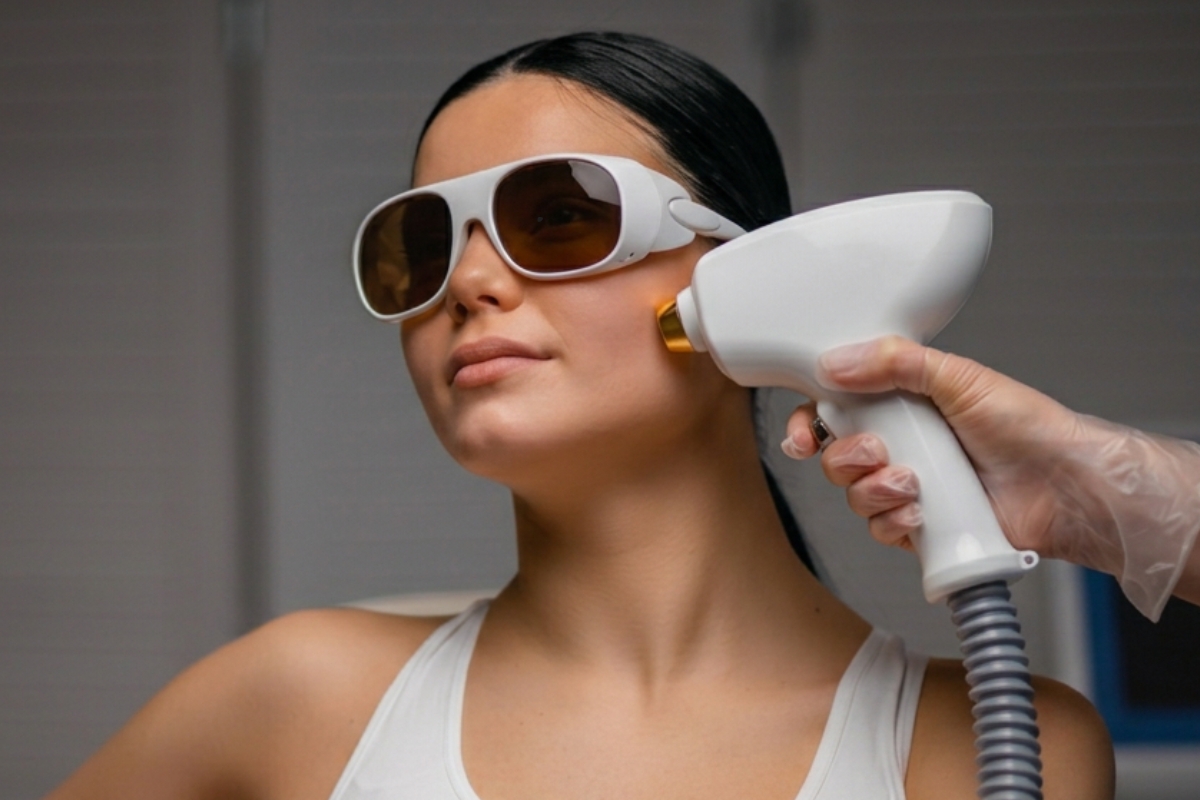
Unwanted facial and body hair is a common concern in both women and men. Hair growth can vary naturally due to genetics, age, hormonal activity, medications, and certain underlying medical conditions. In some cases, excessive or sudden hair growth may be associated with hormonal changes and may require further medical evaluation.
Laser Hair Reduction (LHR) is one of the most effective long-term approaches for reducing unwanted hair. However, in women, excessive facial or body hair can sometimes be associated with an underlying hormonal condition. Identifying and addressing any contributing factor may therefore be an important part of the overall treatment approach.
Common treatment areas include:
A dermatological assessment helps evaluate the pattern, density, thickness, and distribution of hair and determine whether further hormonal or medical evaluation may be appropriate. This allows treatment to be planned according to the individual’s needs and underlying cause.
Hirsutism is a condition in which women develop excessive growth of coarse, dark hair in areas that are typically influenced by androgens, such as the upper lip, chin, jawline, chest, abdomen, and back. The hair is usually thicker and more pigmented than the fine, soft hair normally present in these areas.
Hirsutism may be associated with several factors, including:
The presence of facial or body hair does not necessarily indicate a hormonal disorder. However, new, rapidly increasing, or unusually extensive hair growth—especially when accompanied by irregular periods, acne, scalp hair thinning, or other hormonal symptoms—may warrant medical evaluation.
At Eternis, we assess the pattern, distribution, and progression of hair growth to understand whether further hormonal or medical evaluation may be appropriate. Once any underlying factors have been considered, cosmetic treatments such as Laser Hair Reduction (LHR) may be incorporated into the management plan.
At Eternis Clinic, we use Primelase, a high-power triple-wavelength laser platform for medical laser hair reduction.
Laser hair reduction in Indian skin requires careful selection of wavelength, fluence, pulse duration and cooling, because higher levels of melanin in the skin can increase the risk of pigmentation or burns if treatment is not appropriately customized.
Its multiple wavelengths allow treatment to be customized according to the patient’s skin type, hair thickness, hair characteristics and treatment area.
Different wavelengths can target hair follicles at different depths, allowing a more individualized approach to laser hair reduction.
Laser energy is absorbed by pigment within the hair and follicle, producing controlled thermal damage that reduces the follicle’s ability to produce new hair. The treatment is designed to selectively target the hair follicle while minimising the impact on the surrounding skin when appropriately customised.
With an appropriately planned treatment course, patients may experience:
Multiple sessions are required because laser treatment is most effective when hair follicles are in the appropriate stage of the growth cycle. Since follicles are not all active at the same time, sessions are spaced at suitable intervals to progressively target follicles during their responsive growth phase.
The number of sessions and treatment settings can vary depending on factors such as skin type, hair colour, hair thickness, treatment area, and individual hair-growth patterns.
Laser hair reduction can be particularly effective for reducing coarse, dark hair
associated with hirsutism and PCOS. However, LHR treats the hair follicle and does not treat the underlying hormonal cause.
If androgen excess or PCOS is contributing to unwanted hair growth, appropriate medical evaluation and management may be recommended alongside LHR.
Combining hormonal management with laser treatment can provide better long-term control, although maintenance laser sessions may still be required because hormonal stimulation can lead to new hair growth.
Hormonal evaluation may be considered when unwanted facial or body hair is accompanied by other signs that could suggest androgen excess or an underlying hormonal or metabolic condition. These may include:
The need for hormonal investigations is individualised according to the patient’s medical history, symptoms, pattern of hair growth, and clinical examination. Not every person with unwanted hair requires hormonal testing, and investigations are recommended when the clinical assessment suggests they may provide useful information.
LHR should be understood as long-term hair reduction rather than guaranteed permanent removal of every hair. Most patients experience significant reduction after an appropriate treatment course.
Some finer or new hairs may appear over time, particularly when hormonal factors are involved. Maintenance sessions may therefore be required.
At Eternis Clinic, unwanted hair is approached from both a dermatological and aesthetic perspective. We assess whether the hair growth represents normal variation, hormonally influenced hair growth, or hirsutism.
Where appropriate, treatment may combine:
Our goal is not simply to remove unwanted hair, but to understand why it is growing and create a safe, personalized long-term treatment strategy.
Yes. Laser Hair Reduction (LHR) is an effective long-term method for reducing unwanted hair. The laser targets pigment within the hair follicle, helping reduce its ability to produce new hair over successive treatment sessions.
Results can vary depending on factors such as hair colour, thickness, skin type, treatment area, and hormonal influences. Multiple sessions are usually required, and periodic maintenance treatments may be recommended to sustain the results.
Laser Hair Reduction can provide long-lasting reduction in unwanted hair, but it does not guarantee complete permanent removal. With an appropriate course of treatments, hair growth can become significantly reduced, and any regrowth is often finer, lighter, and less noticeable. Maintenance sessions may be needed to help sustain the results over time.
Laser Hair Reduction is designed to achieve significant and long-term reduction in hair growth, rather than complete removal of every hair. Results vary between individuals, and any regrowth is often finer, lighter, and less noticeable. Periodic maintenance sessions may be recommended to manage new or returning growth.
Hair-loss treatments are generally considered safe when chosen according to the individual’s condition and administered by a qualified dermatologist. Since treatment options differ in their suitability and possible side effects, a thorough evaluation of the hair loss and relevant medical history should be completed before treatment begins.
It is generally better to shave closer to your laser session, usually around 24–48 hours beforehand, depending on the treatment area and clinic instructions. Shaving several days earlier may allow more hair to grow above the skin, which can affect treatment comfort and how efficiently the laser energy reaches the hair follicle.
Laser Hair Reduction is generally well tolerated, with most people experiencing mild, brief discomfort during treatment. The sensation can vary depending on the treatment area, hair thickness, and individual sensitivity, and any discomfort usually lasts only for the duration of the laser pulses.
The number of sessions varies based on factors such as the treatment area, hair thickness, skin type, and individual hair-growth cycle. A series of sessions is usually required, with treatments scheduled at appropriate intervals to target hair follicles during their active growth phase.
Hair does not disappear immediately after treatment. The treated hairs are gradually shed over the following several days to a few weeks, as the follicles respond to the laser energy. The timing can vary depending on the treatment area, hair characteristics, and individual growth cycle.
Copyright © Eternis Skin Clinic 2026 All Rights Reserved.

Eternis Skin Clinic
We're Online!
Eternis Skin Clinic
How can we help you today?
Powered by Elementor