
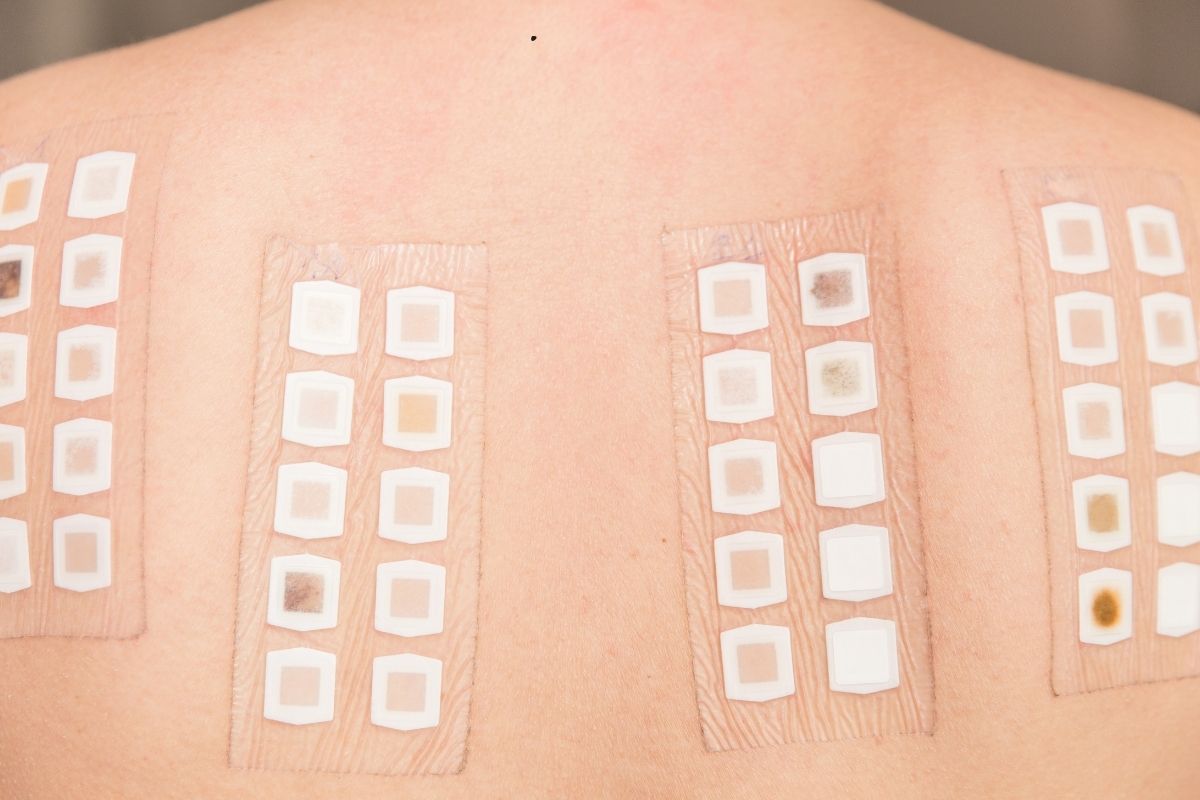
Patch testing is a diagnostic method used to identify substances that may be triggering allergic contact dermatitis. During the test, small quantities of suspected allergens are applied to specific areas of the skin using adhesive patches. The patches remain in place for a designated period, after which the dermatologist examines the skin for signs of an allergic reaction. Depending on the patient’s symptoms and suspected triggers, testing may involve a broader allergen panel or a smaller selection of commonly encountered substances.
A positive reaction may appear as redness, itching, swelling, irritation, or a rash at the test site. In some cases, the affected skin may become dry, scaly, cracked, or develop small blisters. Patch testing can help identify the substance responsible for recurring skin reactions, allowing dermatologist to recommend practical ways to avoid the trigger and manage future flare-ups.
A patch test helps find out whether a particular substance is causing your skin allergy or irritation. Dermatologist may suggest this test if you have repeated itching, redness, rashes, dryness, or swelling that keeps coming back and the trigger is not clear. Finding the cause can make it easier to avoid the substance and manage your symptoms more effectively.
The test can identify sensitivity to everyday ingredients and materials found in cosmetics, skincare products, perfumes, hair dyes, soaps, metals, adhesives, and other products you may come into contact with. Once the trigger is identified, dermatologist can guide you on what to avoid and recommend suitable treatment to help prevent future flare-ups.
Patch testing is a simple process that usually takes place over several days. Small amounts of suspected allergens are applied to the skin using specially prepared patches, which are then left in place for about 48 hours. During this time, it is important to keep the patches dry and avoid activities that could cause them to loosen.
Once the patches are removed, dermatologist examines the test areas for signs of a reaction. A further assessment is usually carried out around 72–96 hours after application, as some allergic reactions can take time to appear. Redness, itching, swelling, or a rash in a particular test area may indicate sensitivity to that substance. Dermatologist will interpret the results in combination with your symptoms and exposure history before confirming whether an allergen is clinically relevant.
Patch testing is generally well tolerated, although the skin may develop mild irritation at the areas where the patches were placed. Temporary redness, itching, swelling, or discomfort can occur, particularly when there is a positive reaction to one of the tested substances. These changes usually settle after the test is completed.
People with darker skin may occasionally notice temporary changes in pigmentation at the test sites, such as a darker or lighter patch, which can take longer to fade. In some individuals with certain inflammatory skin conditions, patch testing may trigger a temporary flare-up. Serious complications are uncommon, but persistent irritation or signs of infection should be reported to dermatologist so that appropriate care can be provided.
No. Blood tests find immediate (Type-I) allergies. Patch testing finds delayed (Type-IV) contact allergies — the cause of most rashes from products and metals.
Patch testing is usually a painless procedure because the skin is not pierced and no injections are involved. You may notice mild itching, warmth, redness, or irritation if your skin reacts to one of the substances being tested. These sensations are generally temporary and dermatologist can guide you on how to manage any discomfort.
Certain products, medicines, and activities can interfere with patch test results, so dermatologist may ask you to make some temporary changes beforehand. Depending on your individual situation, you may need to avoid applying topical steroid creams to the test area, limit significant sun exposure on the back, and discuss any medicines you are taking with dermatologist before the appointment.
Do not stop prescription medicines on your own. Your dermatologist will let you know if any medication needs to be paused and for how long to ensure the test provides reliable results.
A positive result means that your skin has shown a reaction to one of the substances tested, suggesting sensitivity to that particular allergen. Dermatologist will interpret the result alongside your symptoms, medical history, and everyday exposures to determine whether the substance is actually responsible for your skin problems.
Copyright © Eternis Skin Clinic 2026 All Rights Reserved.

Eternis Skin Clinic
We're Online!
Eternis Skin Clinic
How can we help you today?
Powered by Elementor