
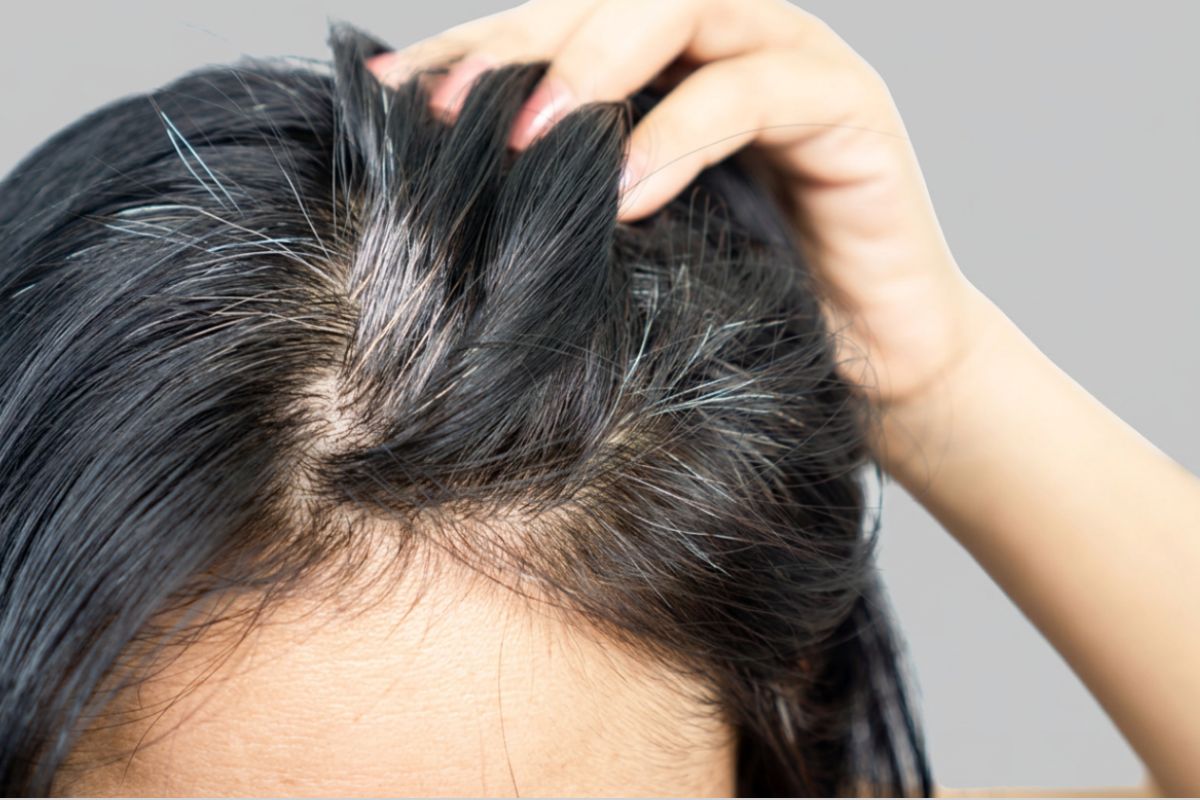
Premature graying refers to hair turning grey or white earlier than expected for a person’s age. It occurs when hair follicles produce less melanin, the pigment responsible for hair colour. Genetics is a major factor, but premature graying may also be associated with nutritional deficiencies, certain medical or hormonal conditions, oxidative stress, smoking, or other underlying factors.
Hair gets its natural colour from melanin, a pigment produced by specialised cells within the hair follicles. As we age, these cells gradually become less active, resulting in reduced melanin production and the appearance of grey or white hair. This is a normal part of the ageing process and can occur at different ages depending on the individual.
When significant greying appears earlier than expected for a person’s age or family pattern, it may be considered premature graying. Genetics is one of the strongest influences on when hair begins to turn grey, but other factors may also play a role.
Premature graying can sometimes be associated with nutritional deficiencies, thyroid disorders, autoimmune conditions, smoking, oxidative stress, or other underlying factors. A medical evaluation may be considered when greying develops unusually early, progresses rapidly, or occurs alongside other symptoms.
Several factors may influence when and how quickly hair begins to turn grey. Possible contributing factors include:
However, genetics remains an important factor, and in many patients, no specific reversible cause is identified. When premature graying develops rapidly or is accompanied by other symptoms, appropriate medical evaluation can help determine whether an underlying contributing factor should be investigated.
Once a hair has grown out grey because its follicle is no longer producing sufficient pigment, there is no consistently proven treatment that can reliably restore its original color. The important first step is to determine whether there is an underlying, potentially correctable cause.
If a nutritional deficiency or medical condition is identified, treating it may help prevent or slow further progression. However, existing grey hairs may not necessarily regain their colour.
A dermatologist may assess:
Investigations may be recommended based on the individual’s history and examination, rather than routinely testing for every possible deficiency.
Management of premature graying focuses primarily on identifying any correctable underlying factors and maintaining overall hair and scalp health. Since existing grey hair may not reliably regain its original colour, the approach is often directed toward addressing contributing factors and supporting healthy hair growth.
Management may include:
Consider a dermatology consultation if:
At Eternis Clinic, premature greying is evaluated from a medical and dermatological perspective. Where appropriate, underlying nutritional or medical contributors are investigated and addressed.
The goal is to identify modifiable factors, prevent unnecessary progression where possible and provide realistic guidance about available cosmetic options.
In some cases, addressing an underlying factor such as a nutritional deficiency or certain medical condition may help slow further greying and, in limited situations, allow some pigment to return. However, when premature greying is primarily genetic or age-related, existing grey hair is unlikely to regain its original color.
Finding a few grey hairs in your mid-20s can be normal and is often influenced by genetics and individual hair pigmentation patterns. The age at which premature graying is defined can vary across populations, so occasional grey strands at 25 do not necessarily indicate an underlying health problem.
Premature greying can have several contributing factors, with genetics being one of the strongest influences. In some young adults, factors such as nutritional deficiencies, smoking, chronic stress, oxidative stress, certain medical conditions, or lifestyle factors may also be associated with earlier loss of hair pigmentation.
Dr. Pinanky Adhe & Dr. Vijay Adhe at Eternis Skin, Hair, Laser & Aesthetics Clinic, are one of the best dermatologist for premature gray hair treatment
Copyright © Eternis Skin Clinic 2026 All Rights Reserved.

Eternis Skin Clinic
We're Online!
Eternis Skin Clinic
How can we help you today?
Powered by Elementor