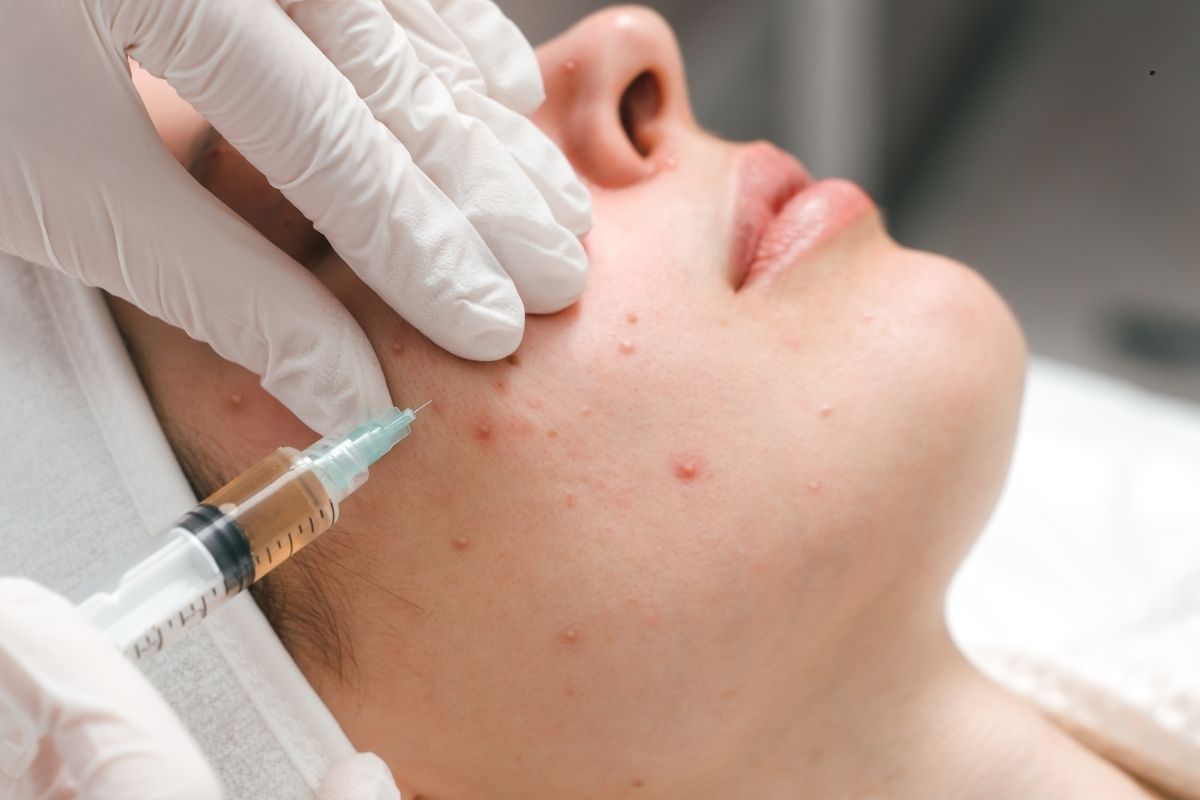
Intralesional therapy is a targeted dermatological procedure in which medication is injected directly into a specific skin lesion or affected area. It may be recommended for concerns such as keloids, cystic acne, alopecia areata, and certain thick or persistent skin lesions where topical treatment may not provide sufficient results.
At Eternis Skin Clinic, Pune, our dermatologists assess the condition carefully and determine whether intralesional therapy is an appropriate treatment option based on the individual patient’s needs.
Intralesional therapy involves delivering a small amount of medication directly into the affected area of the skin. Because the medicine is placed at the site requiring treatment, it can act locally while limiting exposure to the rest of the body. The medication used depends on the condition being treated and may include corticosteroids or other medicines selected by the dermatologist.
The dermatologist first examines the affected area and determines whether an intralesional approach is appropriate. A very small quantity of medication is then injected into the lesion or affected skin using a fine needle. Delivering the medicine directly to the target area allows treatment to be concentrated where it is needed rather than relying entirely on medication applied to the skin or taken by mouth.
Intralesional therapy is generally performed as an outpatient procedure. The treatment area is examined and cleaned before the medication is carefully injected into the targeted lesion. You may feel a brief pinching or stinging sensation during the injection. The session is usually short, although the duration depends on the number and size of areas being treated.
Most patients can resume their usual activities soon after treatment. Mild tenderness, redness, or swelling around the injection site may occur temporarily. Dermatologist may provide specific aftercare instructions depending on the condition treated and the medication used. Avoid rubbing or irritating the treated area unless otherwise advised.
At Eternis Skin Clinic, we first identify the skin condition and assess the affected area before deciding whether intralesional therapy is suitable. Our dermatologists select the medication, concentration, and treatment frequency according to the individual concern, with the aim of delivering targeted treatment while maintaining patient safety and comfort.
You may experience a brief pinching or stinging sensation when the medication is injected. The level of discomfort varies depending on the treatment area and the condition being treated.
The injection itself is usually quick. The overall appointment depends on the number and size of lesions being treated.
Intralesional therapy can help reduce the size, thickness, and symptoms of keloids, but keloids can recur. Your dermatologist may recommend combining injections with other treatments depending on the individual case
It can be useful for selected large and inflamed acne cysts. A dermatologist determines whether an injection is appropriate based on the type and severity of the lesion.
Yes. Intralesional treatment may be considered for limited patches of alopecia areata in suitable patients. The decision depends on factors such as the extent and location of hair loss.
Yes. Intralesional treatment may be considered for limited patches of alopecia areata in suitable patients. The decision depends on factors such as the extent and location of hair loss.
The response depends on the condition being treated and the medication used. Some inflammatory lesions may improve relatively quickly, while conditions such as keloids or alopecia areata may require multiple sessions and more time to show noticeable improvement.
Copyright © Eternis Skin Clinic 2026 All Rights Reserved.
Eternis Skin Clinic
We're Online!
Eternis Skin Clinic
How can we help you today?
Powered by Elementor