
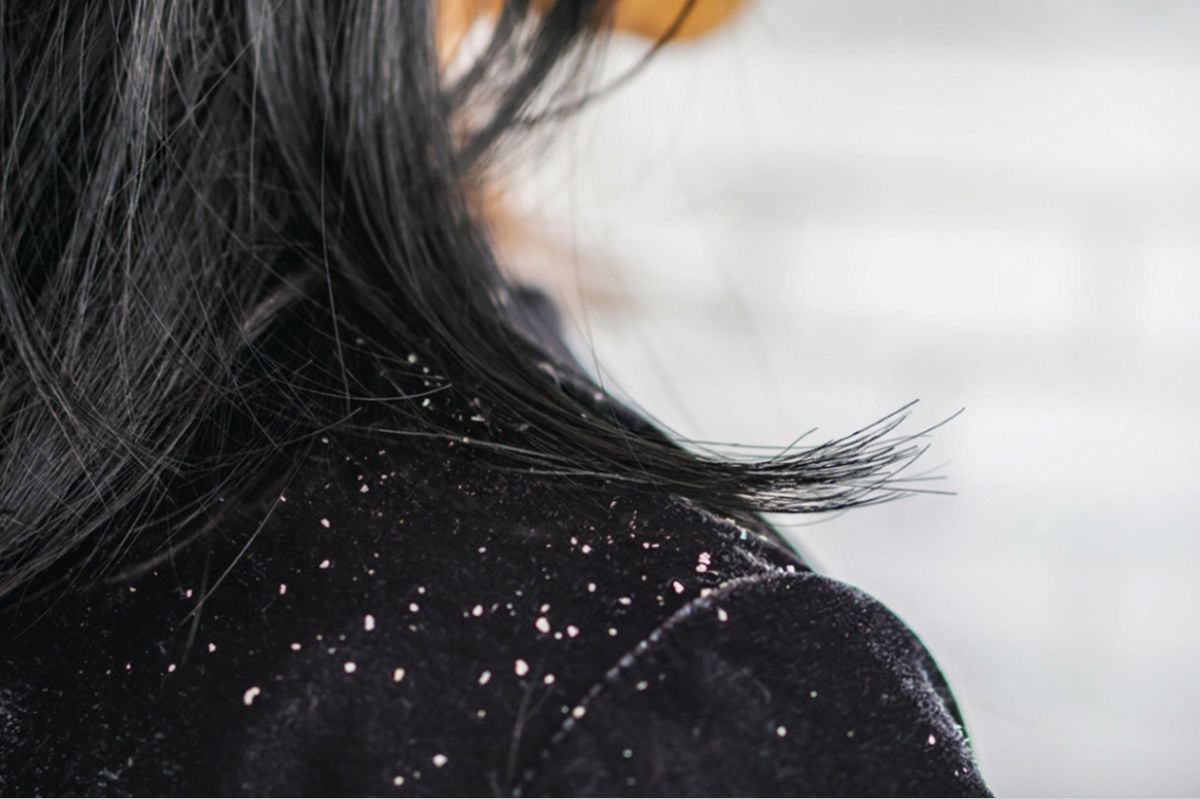
A healthy scalp provides the foundation for healthy hair growth. Changes in the scalp environment, such as excess oiliness, dryness, dandruff, inflammation, or irritation, can lead to symptoms including itching, flaking, redness, and discomfort.
Scalp flaking does not always mean dandruff. Conditions such as seborrheic dermatitis, psoriasis, contact dermatitis, and fungal infections can produce similar symptoms but have different underlying causes and treatment requirements. Identifying the specific scalp condition is therefore important for choosing the appropriate treatment and maintaining overall scalp and hair health.
Dandruff is a common scalp condition that typically appears as white or greyish flakes on the scalp and may be accompanied by mild itching or irritation. It can become more noticeable when the scalp is oily, dry, or irritated.
One of the factors associated with dandruff is Malassezia, a type of yeast that naturally lives on the scalp. In some people, increased sensitivity to this yeast, along with scalp oiliness, can contribute to flaking and irritation.
Dandruff is usually manageable with the right scalp-care routine. Medicated shampoos containing appropriate active ingredients can help control flaking and maintain a healthier scalp. Consistent use, along with guidance from a dermatologist when symptoms persist or recur, can help prevent frequent flare-ups.
Seborrheic dermatitis is a common inflammatory scalp condition that can cause more persistent symptoms than ordinary dandruff. It may develop when the scalp becomes more sensitive to factors such as oil production and the naturally occurring Malassezia yeast.
Common symptoms may include:
Unlike mild dandruff, seborrheic dermatitis may require medicated treatment during active flare-ups to control inflammation, itching, and scaling. Once symptoms improve, a suitable maintenance routine may help reduce the frequency and severity of future flare-ups.
Dandruff and seborrheic dermatitis can look similar, but they are not exactly the same. Dandruff is mainly characterised by scalp flaking, usually with little or no visible inflammation, while seborrheic dermatitis involves inflammation along with redness, itching, and sometimes greasy or adherent scales.
Good scalp care is not about using more products. It is about maintaining a clean, balanced, and comfortable scalp while avoiding unnecessary irritation.
A healthy scalp-care routine may include:
A consultation is recommended if you experience:
These symptoms may indicate seborrheic dermatitis, scalp psoriasis, contact dermatitis, folliculitis, fungal infection or another scalp disorder rather than simple dandruff.
At Eternis Clinic, scalp problems are assessed to identify the underlying cause rather than treating every flaky scalp as dandruff.
Treatment may include appropriate medicated shampoos, topical treatments and maintenance therapy.
Where necessary, scalp examination and dermoscopy can help differentiate dandruff and seborrheic dermatitis from other scalp conditions.
Healthy hair begins with a healthy scalp.
The best treatment for dandruff depends on its severity and cause. Medicated anti-dandruff shampoos containing ingredients such as ketoconazole, zinc pyrithione, selenium sulfide, or salicylic acid are commonly used to control flakes, itching, and scalp irritation. For persistent or severe dandruff, a dermatologist may recommend stronger treatments based on the underlying scalp condition.
Dandruff can usually be effectively controlled rather than permanently eliminated, as it may recur over time. Appropriate medicated shampoos, regular scalp care, and treatment suited to the underlying cause can help reduce flakes and keep the scalp clear. Persistent or recurring dandruff may require a dermatological assessment to rule out conditions such as seborrheic dermatitis or psoriasis.
Dandruff can be effectively managed but may not be permanently eliminated, as it can return periodically in some people. A suitable scalp-care routine, medicated shampoos when required, and appropriate treatment can help control flaking and reduce the frequency of flare-ups.
Dandruff may improve within a week with a consistent and appropriate scalp-care routine, although results vary from person to person. Medicated anti-dandruff shampoos containing suitable active ingredients can help control flaking and scalp irritation, while persistent or severe symptoms may require a dermatological assessment.
Dandruff is linked to a combination of factors, including the natural Malassezia yeast present on the scalp, scalp oil production, and an individual’s sensitivity to these factors. This interaction can increase scalp irritation and accelerate the shedding of skin cells, resulting in the visible flakes associated with dandruff.
No specific food can cure dandruff, but a balanced, nutrient-rich diet can support overall scalp and skin health. Foods providing zinc, omega-3 fatty acids, B vitamins, protein, and probiotics may help support normal skin function and the scalp’s natural barrier. Staying well hydrated and limiting excessive intake of highly processed and sugary foods can also contribute to overall scalp health.
Copyright © Eternis Skin Clinic 2026 All Rights Reserved.

Eternis Skin Clinic
We're Online!
Eternis Skin Clinic
How can we help you today?
Powered by Elementor