
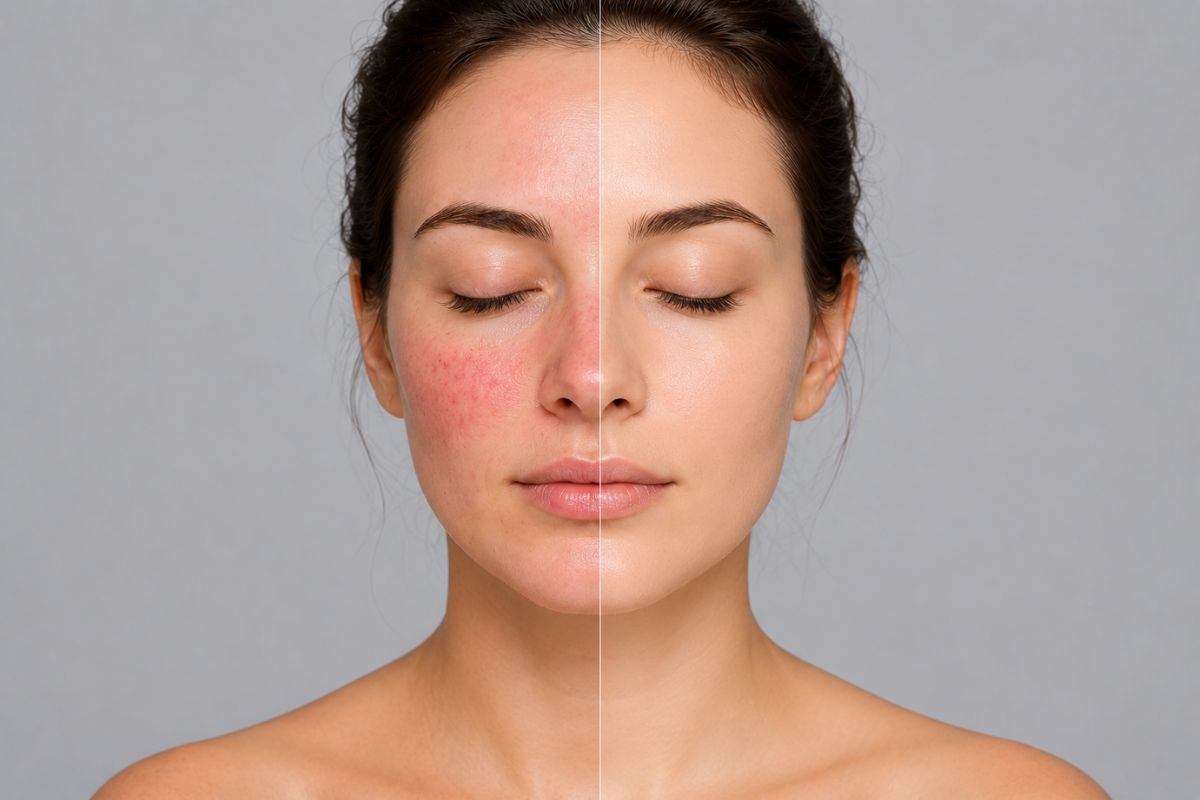
At Eternis Skin Clinic, Pune, rosacea treatment is planned around your specific symptoms, skin sensitivity and rosacea subtype. Our dermatologists assess persistent redness, flushing, acne-like bumps and visible blood vessels before creating a personalized treatment plan that may combine gentle skincare, prescription medicines, trigger management and carefully selected laser procedures.
Rosacea is a chronic inflammatory skin condition that commonly causes facial flushing, persistent redness, visible blood vessels, acne-like bumps, burning or stinging. It can also affect the eyes and, in some people, cause thickening of the skin. Rosacea can look different on Indian and darker skin tones, where redness may be less obvious and discoloration, warmth or sensitivity may be more noticeable.
Rosacea can be harder to recognize in Indian skin because persistent redness and flushing may be less visually obvious than in lighter skin tones. Instead, patients may notice facial warmth, burning, acne-like bumps, sensitivity or brownish discoloration. A dermatologist therefore looks beyond redness alone when assessing rosacea in darker skin.
Rosacea flare-ups can often be reduced by identifying personal triggers, protecting the skin from sun exposure, keeping the skincare routine gentle and avoiding overheating. Keeping a simple record of when flushing or irritation occurs can help identify patterns and guide treatment.
Consider seeing a dermatologist if facial redness or flushing keeps returning, acne-like bumps do not respond to typical acne treatment, your skin burns or stings easily, visible blood vessels are developing, or you have symptoms affecting your eyes.
Treatment depends on the type and severity of rosacea and may include prescription creams, oral medicines, trigger management and laser treatment for persistent redness or visible vessels.
There is no permanent cure for rosacea, but appropriate treatment can effectively control symptoms and reduce flare-ups.
Redness can be managed with trigger avoidance, gentle skincare, prescription treatments and vascular laser treatment when appropriate.
Yes, laser treatment can be effective for rosacea, particularly for reducing persistent redness and visible blood vessels. Treatments such as vascular lasers and intense pulsed light (IPL) can improve the appearance of affected skin.
The number of sessions varies depending on the severity of redness, visible vessels, laser used and individual response to treatment.
Depending on your symptoms, your dermatologist may prescribe creams or gels containing azelaic acid, metronidazole or ivermectin.
Common triggers include sun exposure, heat, spicy foods, hot drinks, alcohol, stress and irritating skincare products.
Spicy foods, hot beverages and alcohol can trigger flare-ups in some people, but individual triggers vary.
Yes, papulopustular rosacea can resemble acne, but flushing, persistent redness and sensitivity can help distinguish the two.
Yes, when appropriately selected and performed by an experienced dermatologist, with laser settings carefully calibrated to your skin type to minimize pigmentation risks.
Copyright © Eternis Skin Clinic 2026 All Rights Reserved.
Eternis Skin Clinic
We're Online!
Eternis Skin Clinic
How can we help you today?
Powered by Elementor