
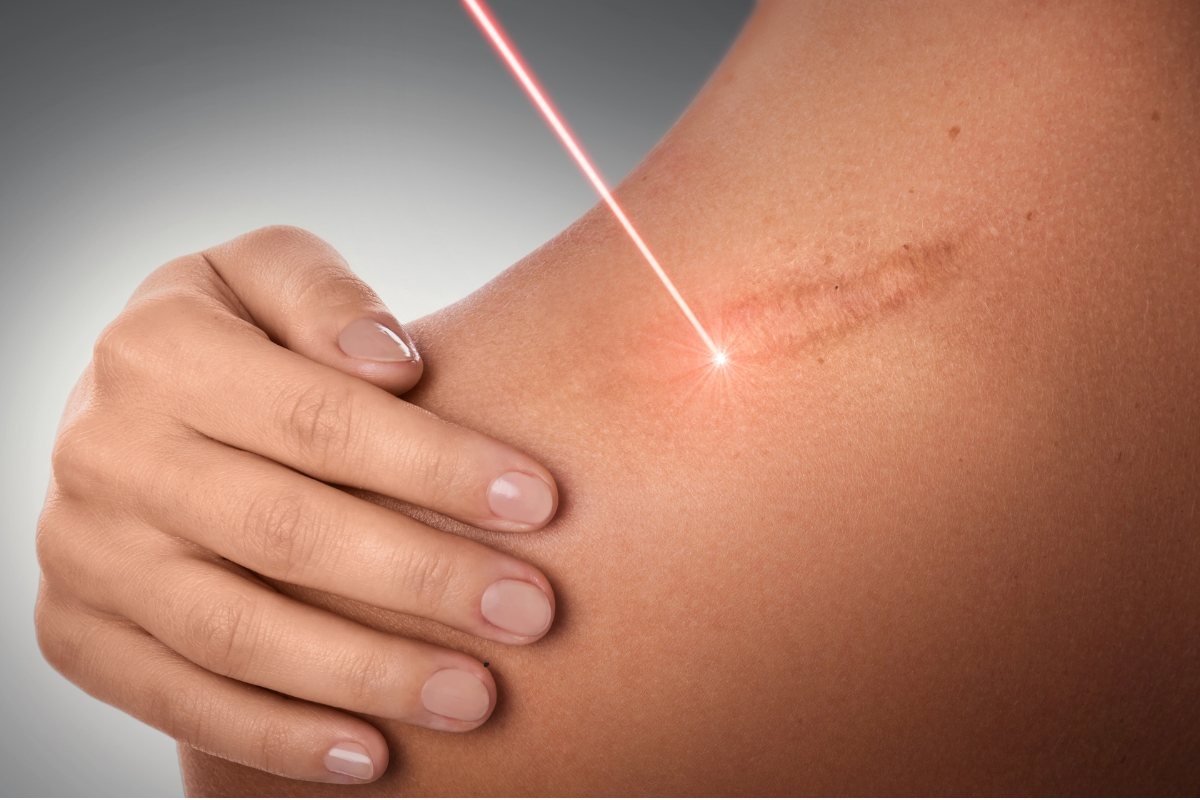
Keloids can be challenging to manage because they extend beyond the original wound, may continue to grow over time, and can recur even after treatment. However, keloids can be treated effectively with a personalised approach, and significant, long-term improvement is possible with the right treatment plan.
Keloids are raised, firm scars that develop when excess scar tissue extends into the surrounding skin. They generally do not disappear on their own and often require professional treatment.
Keloid treatment requires patience and consistency. Multiple sessions may be needed, and regular follow-up helps monitor the response and reduce the risk of recurrence.
Keloids and hypertrophic scars can both appear as raised, firm areas of skin, but they differ in how they develop and behave. Identifying the correct type is important because the treatment approach and expected outcome can vary.
Hypertrophic Scar: A raised, firm scar that may appear red or pink but remains within the boundaries of the original injury. These scars may gradually become flatter and less noticeable over time, often improving within 12 to 24 months, although treatment may be recommended in some cases.
Keloid: A raised, firm scar that grows beyond the original wound and extends into the surrounding healthy skin. Unlike hypertrophic scars, keloids generally do not flatten on their own and may continue to enlarge months or even years after the initial injury has healed. They may also recur after treatment.
How to tell them apart: The key difference is whether the scar stays within the original wound area or extends beyond it. A scar confined to the original injury is more likely to be hypertrophic, while one that spreads into previously unaffected skin is more consistent with a keloid.
Keloids develop when the skin produces an excessive amount of scar tissue while healing after an injury or inflammation. Instead of remaining within the boundaries of the original wound, the scar tissue can continue to grow into the surrounding skin.
Keloids may develop after:
Some individuals have a greater tendency to develop keloids due to their individual healing response and genetic predisposition. A person who has developed a keloid in the past may also be more likely to develop another one following a future skin injury.
Keloids can continue to grow after the original wound has healed and may also recur after treatment, which is why appropriate treatment and follow-up are important.
Keloids are usually:
Common locations include the ears, chest, shoulders, upper back, and jawline.
Treatment may include a combination of approaches, depending on the size, location, thickness, and activity of the keloid:
Treatment is typically planned over a 4–6 month course, with the exact protocol individualised for each patient based on the keloid and its response to treatment. Consistent follow-up is important to monitor progress and guide further treatment when required.
Keloids can often be significantly reduced in size, thickness, redness and symptoms, but they have a tendency to recur.
Treatment therefore focuses not only on reducing the existing keloid but also on
long-term control and reducing recurrence.
Dr Vijay Adhe & Dr Pinanky Adhe at Eternis Skin, Hair, Laser & Aesthetics Clinic, Erandwane, Pune are among the best doctors for keloid scar treatment.
Early assessment is recommended if a scar is becoming raised, firm, itchy, painful or progressively larger. At Eternis, keloids are assessed individually and treatment is selected according to the scar's size, location, activity and previous treatment history.
Keloid removal is generally well tolerated, as the area is numbed with local anaesthesia before the procedure. You may experience a brief pinch or mild stinging while the anaesthetic is administered, but the procedure itself should be comfortable. Some tenderness or discomfort may occur as the area heals afterward.
Keloids generally do not disappear without treatment. Unlike some scars that gradually become flatter and less noticeable, keloids can remain raised and may continue to grow over time. Professional evaluation can help determine the most appropriate treatment approach.
Copyright © Eternis Skin Clinic 2026 All Rights Reserved.

Eternis Skin Clinic
We're Online!
Eternis Skin Clinic
How can we help you today?
Powered by Elementor