
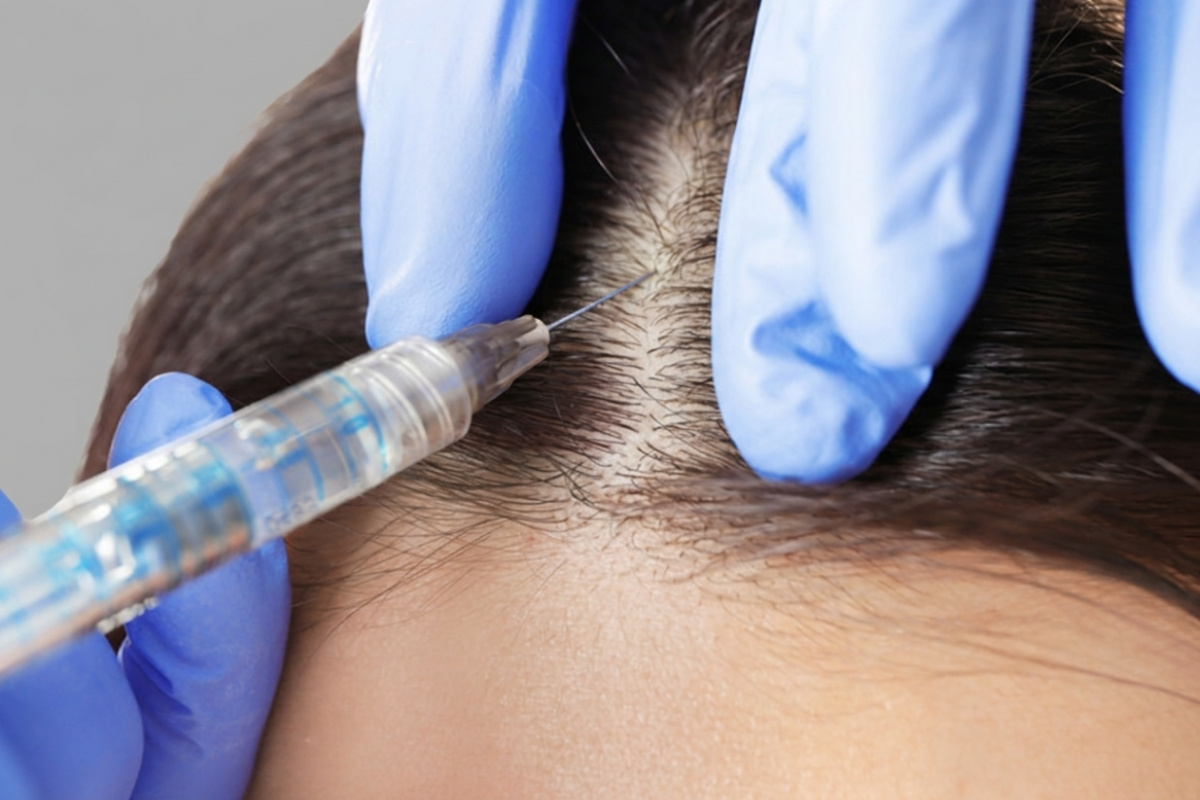
Hair fall is one of the most common hair concerns. In many patients, the primary problem is excessive shedding rather than progressive hair thinning. One of the most common causes is telogen effluvium, where a larger-than-usual number of hairs enter the resting phase of the hair cycle and are subsequently shed.
Persistent hair fall may eventually result in:
If you have noticed that your hair fall is increasing, seeking an early consultation with a qualified hair specialist can help identify the underlying cause and prevent the condition from progressing.
If you are looking for hair fall treatment in Pune, Eternis Skin, Hair, Laser & Aesthetics Clinic provides personalised, non-surgical approaches to manage hair loss and support healthier hair growth.
The clinic’s experienced dermato-trichology team evaluates factors such as your hair condition, scalp health, pattern of hair loss and possible underlying causes before recommending an appropriate treatment plan.
Depending on your individual condition, treatment may aim to:
Hair loss, also referred to medically as alopecia, can affect both men and women. While losing some hair every day is normal, persistent or excessive shedding may indicate an underlying issue. The causes can vary from genetics and hormonal changes to lifestyle, nutrition, medications, and scalp conditions.
Common factors that may contribute to hair loss include:
Genetic Predisposition: Hair loss can run in families. A genetic tendency towards male pattern hair loss or female pattern hair thinning may increase the likelihood of developing progressive hair loss over time.
Hormonal Changes: Shifts in hormone levels can influence the hair growth cycle. Conditions such as PCOS, pregnancy, postpartum changes, thyroid-related problems, and menopause may be associated with increased shedding or reduced hair density.
Physical or Emotional Stress: Significant physical stress, illness, surgery, emotional distress, or major lifestyle changes can temporarily disrupt the normal hair growth cycle. This may result in increased shedding several weeks or months after the triggering event.
Nutritional Deficiencies: Hair growth depends on adequate nutrition. Low levels of nutrients such as iron, vitamin D, zinc, protein, and other essential nutrients may affect follicle function and contribute to increased hair shedding.
Underlying Medical Conditions: Certain health conditions can affect the scalp or interfere with normal hair growth. Examples include alopecia areata, scalp infections, thyroid disorders, and other systemic conditions.
Certain Medications: Hair shedding can sometimes occur as a side effect of medications. Drugs used for conditions such as cancer, depression, blood-related disorders, and other medical conditions may affect the hair growth cycle in some individuals.
Environmental Exposure: Regular exposure to pollution, UV radiation, excessive humidity, dust, and harsh weather conditions can negatively affect scalp and hair health. While these factors may not always directly cause hair loss, they can contribute to scalp irritation, dryness, breakage, or weakened hair.
Hair Styling and Chemical Treatments: Frequent colouring, bleaching, chemical straightening, excessive heat styling, or repeated use of harsh hair products can weaken the hair shaft. Tight hairstyles that continuously pull on the roots may also contribute to traction-related hair loss.
Since hair loss can have multiple causes, identifying the underlying trigger is an important first step. A dermatologist or trichologist can assess your scalp and hair pattern and recommend appropriate investigations or treatment based on your individual condition.
Hair loss does not look the same in everyone. The pattern, severity, and underlying cause can differ from one person to another. Identifying the specific type of hair loss can help a dermatologist or trichologist determine the most appropriate approach for managing it.
Some of the commonly seen types include:
Androgenetic Alopecia (Pattern Hair Loss)
This is one of the most common forms of hair loss and can affect both men and women. It is largely influenced by genetics and hormonal sensitivity. Hair typically becomes progressively finer, with men often experiencing a receding hairline or thinning at the crown, while women may notice a gradual reduction in overall hair density.
Telogen Effluvium
Telogen effluvium is generally associated with increased hair shedding rather than permanent follicle damage. It can develop after significant stress, illness, surgery, rapid weight changes, hormonal shifts, or other physical triggers, causing more hairs than usual to enter the resting phase of the growth cycle. In many cases, the shedding is temporary once the underlying trigger is addressed.
Alopecia Areata
This is an autoimmune form of hair loss in which the immune system mistakenly targets hair follicles. It commonly appears as clearly defined, round or oval patches of hair loss on the scalp, although other areas of the body can also be affected.
Traction Alopecia
Repeated or prolonged tension on the hair roots can lead to traction alopecia. It is commonly associated with tight ponytails, braids, buns, extensions, or other hairstyles that continuously pull on the scalp. If the pulling continues for a long period, the damage to the follicles may become more difficult to reverse.
Because different types of hair loss require different management strategies, accurate diagnosis is an important first step before starting treatment.
Normally, most scalp hairs remain in the growth phase, while a smaller proportion
are in the resting phase. When the hair cycle is disturbed, more hairs can enter the
resting phase together, leading to noticeable shedding.
Telogen effluvium may occur 2–3 months after a trigger, including:
Sometimes, no single trigger can be identified.
Typical features include:
Telogen effluvium usually causes increased shedding rather than sharply defined areas of hair loss.
Telogen effluvium can vary in how long it lasts, depending on the underlying trigger and the hair growth cycle. It is generally classified as acute when shedding is temporary and resolves within a few months, while chronic telogen effluvium involves persistent or recurring hair shedding over a longer period. Understanding the difference can help determine the appropriate approach to evaluation and management.
Acute Telogen Effluvium: Acute telogen effluvium generally follows a temporary trigger. Once the trigger is identified and corrected, excessive shedding usually settles and the hair cycle gradually returns towards normal.
Chronic Telogen Effluvium: When excessive shedding continues or repeatedly recurs for a prolonged period, it may be classified as chronic telogen effluvium.
Chronic shedding requires a careful search for ongoing nutritional, hormonal, medical, lifestyle or medication-related triggers. It is also important to distinguish chronic telogen effluvium from female or male pattern hair loss, as both conditions can occur together.
The most important step is to identify and correct the underlying cause. Depending on the individual patient, treatment may include:
For patients with persistent, excessive or chronic shedding, additional dermatologist-
guided hair therapies are considered as adjuncts to treating the underlying
cause.
Low-Level Light Therapy (LLLT): A non-invasive treatment using low-intensity light to support hair follicle activity and the hair growth cycle.
Hair Mesotherapy: Selected hair-supportive formulations may be delivered into the scalp to support the scalp environment and hair growth, depending on the patient’s clinical requirements.
GFC Therapy: Growth Factor Concentrate (GFC) uses concentrated growth factors derived from the patient’s own blood. It may be considered in selected patients with persistent
shedding or reduced hair density.
These treatments are not substitutes for correcting nutritional deficiencies, hormonal
abnormalities or other underlying causes. They are considered based on the cause,
duration, severity and overall hair assessment.
At Eternis Clinic, hair fall is assessed by looking beyond the amount of hair being
shed to identify why the shedding is occurring and whether there is an
associated hair-thinning disorder.
Treatment is individualised and may combine medical evaluation, nutritional
optimisation, correction of underlying triggers and selected hair therapies
such as LLLT, hair mesotherapy and GFC, when appropriate.
Explore before-and-after results from our clients to see the outcomes of personalized hair fall treatments at Eternis
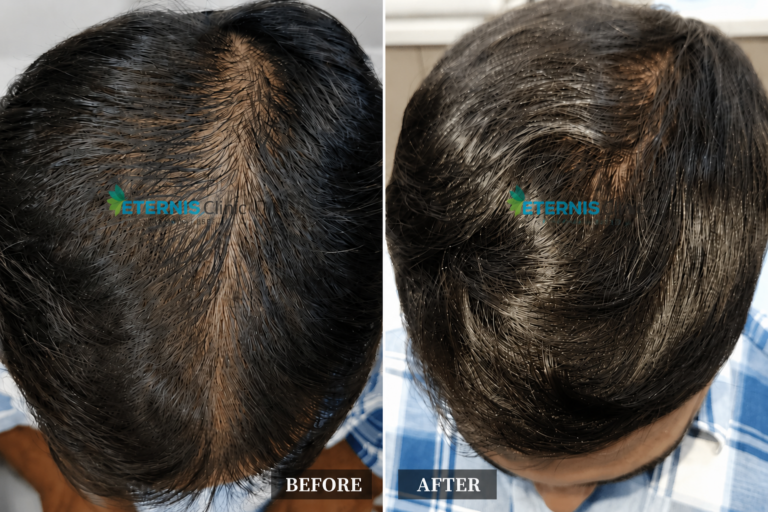
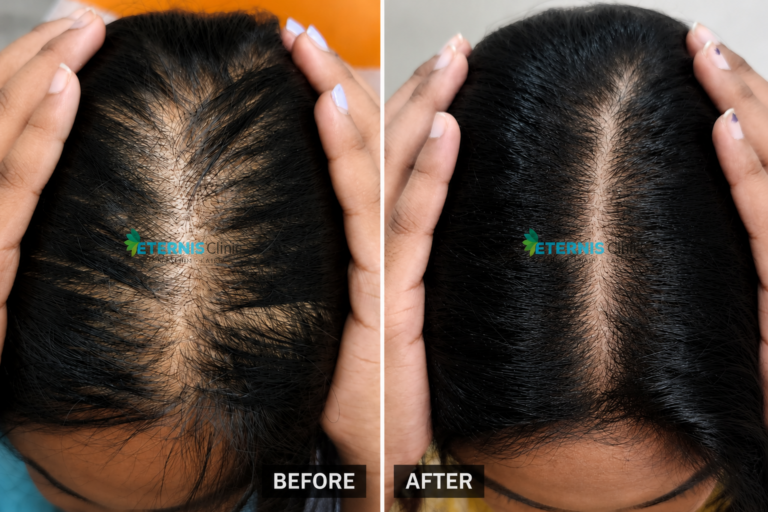
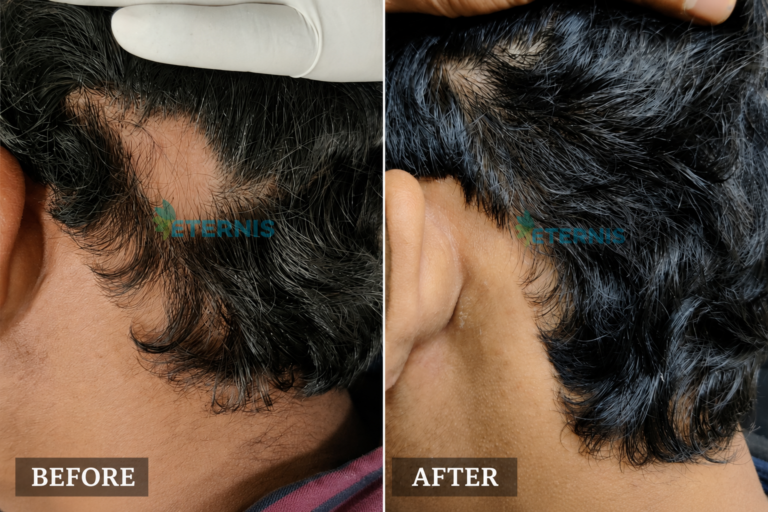
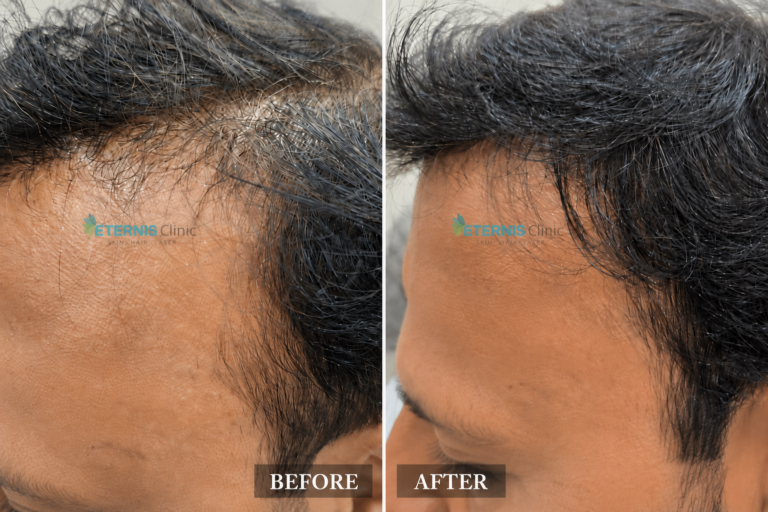
The most suitable treatment depends on the cause, type, and severity of hair loss. Depending on your condition, a dermatologist may recommend treatments such as PRP therapy, GFC therapy, Low-Level Light Therapy (LLLT), or Hair Mesotherapy to help reduce excessive shedding and support healthier hair growth. If hair fall is associated with nutritional deficiencies, hormonal changes, stress, or an underlying medical condition, addressing the root cause is equally important.
Dr Vijay Adhe & Dr Pinanky Adhe at Eternis skin, hair, laser & aesthetics clinic are one of the best doctors in Pune for hair loss treatment
The possibility of stopping hair fall long-term depends on its underlying cause. Genetic hair loss may require ongoing management, as it can gradually progress over time rather than having a permanent one-time cure. However, many forms of hair shedding can be significantly reduced or controlled by identifying the trigger and following an appropriate treatment plan.
Hair regrowth is possible in some cases, particularly when hair loss is identified and treated during its early stages. The outcome depends on the underlying cause, how long the hair loss has been present, and the condition of the hair follicles. Early professional assessment can help determine whether the affected follicles are still capable of producing hair and which treatment approach may be appropriate. Seeking medical advice at the first signs of persistent thinning or excessive shedding can improve the chances of achieving better hair regrowth results.
Most non-surgical hair restoration treatments at Eternis Skin, Hair, Laser & Aesthetics Clinic are designed to be comfortable and involve no surgical cuts or stitches. Depending on the treatment selected, you may experience mild and temporary discomfort, particularly with procedures that involve injections or scalp applications. Any discomfort generally settles shortly after the session, and your doctor will take appropriate measures to make the procedure as comfortable as possible.
Most non-surgical hair loss treatments are generally well tolerated when performed under professional medical supervision. Depending on the procedure, you may experience mild and temporary effects such as redness, swelling, tenderness, or slight discomfort at the treatment site. These usually settle within a short period. At Eternis Skin, Hair, Laser & Aesthetics Clinic, the treatment approach is selected based on your individual condition, and your doctor will explain the expected effects and aftercare before the procedure.
Copyright © Eternis Skin Clinic 2026 All Rights Reserved.
Eternis Skin Clinic
We're Online!
Eternis Skin Clinic
How can we help you today?
Powered by Elementor