
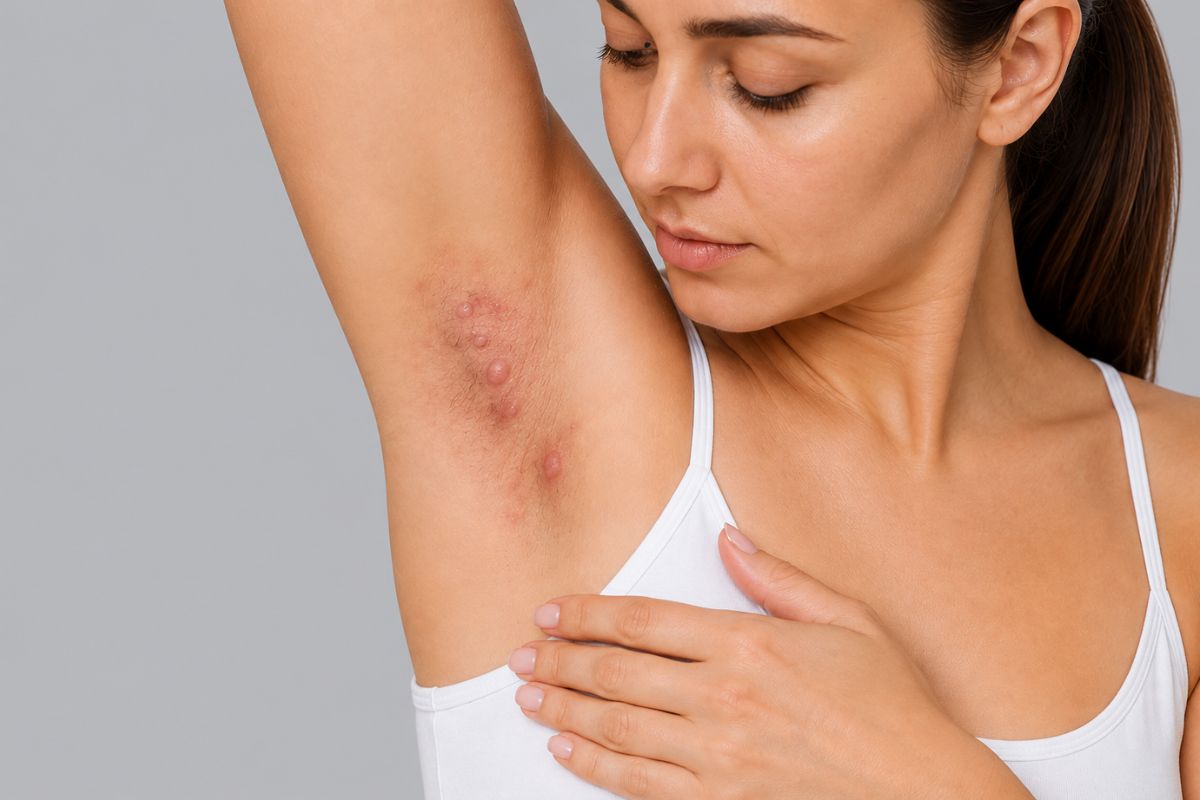
Hidradenitis suppurativa treatment depends on the severity, frequency of flares, presence of tunnels and scarring, and how much the condition affects daily life. Treatment may include topical or oral medicines, hormonal therapy, biologics, injections, laser-based treatments, deroofing or surgery. Early treatment aims to control inflammation and prevent recurrent lesions from progressing to permanent tunnels and scars.
Hidradenitis suppurativa (HS) is a chronic inflammatory skin condition that causes painful, recurring lumps, boils, or abscesses, usually in areas where skin rubs together, such as the armpits, groin, inner thighs, buttocks, and under the breasts. These lumps may fill with pus, burst and drain, and over time can lead to scarring or tunnels beneath the skin. HS is not contagious and is not caused by poor hygiene. While the exact cause is not fully understood, genetics, hormonal changes, smoking, and excess weight may contribute to its development. Early diagnosis and appropriate treatment can help control symptoms, reduce flare-ups, and prevent scarring.
There is no single best treatment for hidradenitis suppurativa. The right approach depends on whether you have occasional inflammatory nodules, recurrent abscesses, draining tunnels, or established scarring.
Mild HS may respond to topical medicines, antiseptic washes, lifestyle measures and selected in-clinic treatments. Recurrent or more extensive disease may require oral medication, hormonal treatment or biologic therapy. Once persistent tunnels have formed, procedures such as deroofing, CO₂ laser treatment or surgical excision may be considered.
The goal is not simply to treat each painful lump when it appears. Long-term HS treatment focuses on reducing inflammation, preventing new lesions, managing pain and stopping recurrent disease from causing permanent tunnels and scars.
Hidradenitis suppurativa is usually diagnosed clinically rather than through a single blood test or scan. A dermatologist looks at the location, appearance and recurrence pattern of the lesions and asks about previous boils, drainage, scarring and treatments.
Tests may sometimes be recommended when dermatologist needs to rule out another condition or assess associated health problems.
Hurley Stage I – Nodules or abscesses without tunnels
One or more painful nodules or abscesses occur, but there are no established sinus tracts or extensive scarring.
Hurley Stage II – Recurrent lesions with tunnels
Abscesses recur and may leave behind sinus tracts or tunnels and scarring. Lesions may be separated rather than affecting the entire area.
Hurley Stage III – Extensive interconnected disease
Multiple interconnected tunnels, abscesses and scarring affect a larger area, often requiring combined medical and procedural or surgical treatment.
Yes. Staging helps dermatologist decide how aggressively to treat HS. However, treatment is not based on Hurley stage alone. The number of active nodules and abscesses, presence of tunnels, frequency of flares, pain and impact on daily life are also important when planning treatment.
Important: Treatment is not based on Hurley stage alone. The number of active lesions, frequency of flares, presence of draining tunnels, pain, scarring and impact on daily life are also considered when creating an individualized treatment plan.
An HS flare can cause a sudden, painful nodule or abscess. Treatment depends on whether the lesion is inflammatory, infected, fluctuant or part of an established tunnel. Dermatologist may use topical or oral medication, pain management or an intralesional corticosteroid injection for selected painful inflammatory nodules.
Avoid squeezing or repeatedly pressing an HS lesion. This can increase irritation and does not remove the underlying tunnel. If an abscess is particularly painful, rapidly enlarging or associated with systemic symptoms, medical assessment is important.
Yes, laser treatment can help manage hidradenitis suppurativa (HS) in selected patients, depending on the severity and type of lesions. Laser hair reduction may help reduce recurrent lesions by targeting hair follicles, while CO₂ laser treatment can be used to treat certain persistent HS lesions and tunnels.
Laser hair reduction may help reduce recurrent hidradenitis suppurativa lesions by targeting hair follicles, which are involved in the development of HS. By reducing hair and follicular activity in affected areas, it may decrease the frequency of new nodules and flare-ups in some patients. It is generally considered an adjunctive treatment, rather than a cure, and is more suitable for selected patients with mild-to-moderate HS.
CO₂ laser treatment can be used in selected cases of hidradenitis suppurativa to remove or open up diseased skin and persistent tunnels. The laser precisely targets the affected tissue, allowing the treated area to heal from the inside out. It may be considered when recurrent HS lesions have developed established tunnels that do not respond adequately to medical treatment.
CO₂ laser treatment is not suitable for every type or stage of HS. Dermatologist will assess the location, extent and depth of the tunnels before deciding whether this approach is appropriate.
No. Laser treatment is selected according to the type, location and severity of HS. Laser hair reduction and CO₂ laser treatment serve different purposes and should not be presented as interchangeable treatments.
While hidradenitis suppurativa cannot always be prevented, certain lifestyle and skin-care measures may help reduce the frequency or severity of flare-ups. These measures work best alongside appropriate medical treatment and may need to be tailored to your triggers and disease severity.
Consider seeing a dermatologist if painful boils or lumps repeatedly develop in the underarms, groin, under the breasts, inner thighs or buttocks; if the same lesions keep returning; if they drain; or if you are developing tunnels or scars.
Repeatedly treating these lesions as ordinary boils may delay appropriate HS treatment. A dermatologist can determine whether the pattern is consistent with HS and assess its severity before recommending a treatment plan.
Treatment depends on the severity of HS and may include medicines, lifestyle measures, laser treatments, biologics or surgery.
There is no guaranteed permanent cure, but appropriate treatment can control flare-ups, reduce inflammation and prevent progression.
Treatment may include prescribed medicines, pain management or an intralesional steroid injection for selected painful nodules.
Yes, early and moderate HS can often be managed with medicines, lifestyle measures, injections and selected laser treatments.
Laser treatment may help selected patients by reducing follicular activity or treating persistent HS lesions and tunnels.
Hurley Stage 1 is generally managed with topical treatments, antimicrobial washes, lifestyle measures and selected in-clinic treatments.
Hurley Stage 2 may require oral medicines, biologic therapy in selected cases and procedures such as deroofing or laser treatment for persistent tunnels.
Hurley Stage 3 often requires a combination of medical treatment and definitive procedures such as deroofing, CO₂ laser or surgical excision.
HS can recur after surgery, particularly in other areas, so ongoing medical and lifestyle management may still be needed.
Copyright © Eternis Skin Clinic 2026 All Rights Reserved.

Eternis Skin Clinic
We're Online!
Eternis Skin Clinic
How can we help you today?
Powered by Elementor