


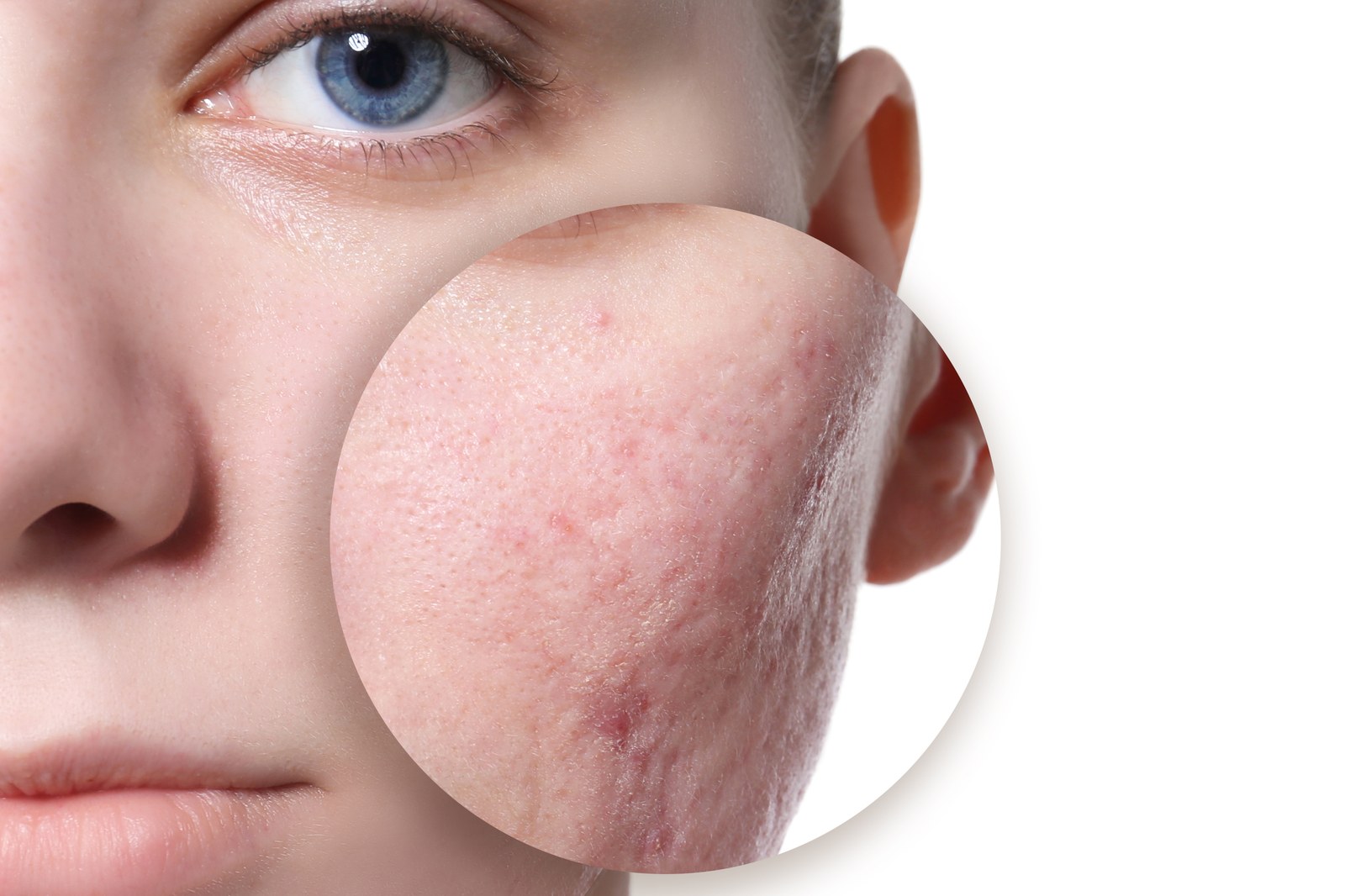
Active acne and acne scars look different, behave differently, and need entirely different treatments. The confusion between them — and the mistake of treating both the same way — is one of the most common reasons patients do not get the results they're expecting.
Here is a clear breakdown of each, and why the sequence of treatment matters as much as the treatment itself.
Active acne: what drives it
Active acne involves living, inflamed lesions — papules, pustules, nodules, and cysts. The root cause is a combination of excess sebum production, follicular occlusion, bacterial overgrowth (C. acnes), and inflammation. In Indian patients, hormonal drivers are common: androgens associated with PCOS, insulin resistance, and adrenal activity all stimulate the sebaceous glands.
The right approach to active acne is systemic: topical retinoids and antibiotics, oral agents where warranted (antibiotics, hormonal therapy, or isotretinoin for severe cases), and in-clinic chemical peels to reduce comedone load and sebum production. No laser or energy device should be used on actively inflamed, pustular acne — it risks spreading infection and triggering post-inflammatory hyperpigmentation (PIH).
Acne scars: types and what causes them
Acne scars form when inflamed lesions damage the dermis — the deeper layer of skin beneath the epidermis. They are structural: the tissue architecture has changed. There are several types:
- Atrophic scars: Depressions in the skin surface. The most common type, subdivided into icepick (narrow, deep), boxcar (broad, sharply defined edges), and rolling (undulating, soft-edged) scars.
- Hypertrophic scars and keloids: Raised, thickened scar tissue. More common on the chest and jawline in patients with a genetic predisposition.
- Post-inflammatory hyperpigmentation (PIH): Brown discolouration left after a lesion heals. Technically not a scar — no structural damage has occurred — but often mistaken for one. PIH fades with time and treatment; true atrophic scars do not resolve on their own.
Why treating both at the same time is a mistake
Attempting to resurface or laser-treat acne scars while active acne is present is counterproductive. Resurfacing procedures create a controlled wound response to stimulate collagen remodelling. If active bacteria and inflammation are present, wound healing is disrupted — and you risk creating new PIH and potentially new scarring on top of the existing damage.
The correct sequence is non-negotiable: clear the active acne first, then address the scars. If your active acne has been under control for at least 2–3 months, you are ready to discuss scar treatment.
What scar treatment involves
For atrophic scars, the clinical mainstays are fractional laser resurfacing (CO2 or erbium), microneedling with radiofrequency (RF), and subcision for rolling scars. Multiple sessions are typically needed — results are cumulative, with each session building on the last.
For keloids and hypertrophic scars, intralesional injections (corticosteroids or 5-FU) and specific laser protocols are used. Keloids require a combination approach and long-term management to prevent recurrence.
For PIH alone, topical depigmenting agents and calibrated peels are usually sufficient — no laser resurfacing is required. Knowing the difference between PIH and a true atrophic scar is the first step in choosing the right treatment.
What not to do
- Do not pick or squeeze active lesions — this is the primary driver of PIH and scarring on Indian skin.
- Do not start resurfacing treatments before active acne is fully cleared.
- Do not assume flat brown marks are permanent scars — PIH is not structural and does not require the same treatment as atrophic scarring.
If you're unsure whether you have active acne, post-acne marks, or true scarring, a clinical assessment is the clearest way to find out. Book a consultation with Dr. Vijay Adhe to map your skin accurately and understand the right treatment sequence for your case.